Castor Oil Packs for Fertility: How to Do a Self Fertility Massage at Home (Step-by-Step Guide)
Castor oil packs for fertility combined with self-fertility massage are two of the most powerful natural therapies I recommend to clients. They’re inexpensive, you can do them at home, and they directly address circulation, inflammation, scar tissue, and hormonal balance—all critical for conception.
In this guide, I’ll walk you through exactly how to make and use a castor oil fertility pack, how to perform a self fertility massage at home, when to use them during your cycle, and what to expect afterward (including brown discharge after a castor oil pack).
Castor oil is derived from the seeds of the Castor plant (Ricinus communis). It stimulates three critical body systems:
The lymphatic system – clears toxins, reduces inflammation, supports immune function
The circulatory system – brings fresh, oxygenated blood to reproductive organs
The liver – supports estrogen detoxification and hormone metabolism
While large-scale clinical trials specifically on castor oil and fertility are limited, the mechanisms are well-established: improved pelvic circulation, reduced inflammation, and enhanced detoxification all support reproductive health. In my 18+ years of clinical practice, I’ve seen castor oil packs help with endometriosis, fibroids, blocked fallopian tubes, ovarian cysts, painful periods, and unexplained infertility.
Benefits of castor oil packs and fertility massage together
Combining self-care fertility massage with castor oil allows healing properties to work quickly and efficiently:
Improve circulation and blood flow to the uterus, ovaries, and fallopian tubes
Help shrink and eliminate ovarian cysts, uterine fibroids, and endometriosis
Step-by-step: how to do a castor oil pack + self fertility massage at home
Do this in a quiet, warm room. Allow 30–45 minutes total (massage + castor oil pack).
Step 1: Warm up. Lie on your back with knees bent. Place hands on your lower belly. Take 5 deep belly breaths to relax your abdominal muscles.
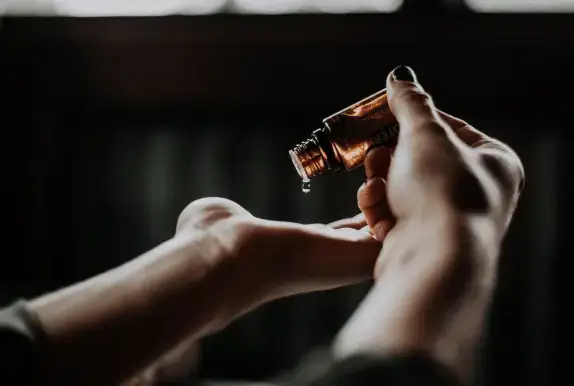
Step 2: Oil your hands. Pour castor oil into your palms. Warm it by rubbing hands together.
Step 3: Massage in circles. Starting at your navel, use gentle clockwise circles with both hands, slowly expanding outward to cover your entire lower abdomen. Continue for 3–5 minutes. This follows the direction of your digestive tract and supports lymphatic flow.
Step 4: Work the uterine area. Place both hands below your navel (the uterine zone). Use small, firm but gentle circular motions. If you feel any tender or tight spots, pause and apply gentle sustained pressure for 30 seconds. Continue for 3–5 minutes.
Step 5: Work each ovary. Your ovaries sit about 2–3 inches below and to each side of your navel. Use fingertip circles on each side for 1–2 minutes.
Step 6: Sweep toward the pelvis. Use long, gentle strokes from your ribcage downward toward your pubic bone. This encourages blood flow toward the reproductive organs. Repeat 10–15 times.
Step 7: Apply castor oil pack. Soak your flannel cloth in castor oil (it should be saturated but not dripping). Place it over your lower abdomen. Cover with plastic wrap or put on an old large t-shirt you don’t mind getting stained. Place heating pad or hot water bottle on top of your lower abdomen. Relax for 30–60 minutes.
Step 8: Clean up. Remove the pack. Wipe excess oil with an old towel. Store the flannel in a glass container—you can reuse it 15–20 times before replacing. Wash hands with dish soap (castor oil is thick).
When to use castor oil packs: cycle timing guide
Timing matters. Here’s when to use based on your situation:
if you are trying to conceive
Use only during the follicular phase (from the end of your period until ovulation). Stop once you’ve confirmed ovulation or are in your fertile window. Do NOT use during the luteal phase or if you suspect pregnancy—castor oil packs stimulate the uterus and could interfere with implantation.
for endometriosis, fibroids, or cysts
Use 3–4 times per week during the follicular phase. Some practitioners recommend daily use for 30 days initially, then reducing to 3–4x/week. Do not use during menstruation if you have very heavy periods—it can increase flow.
for heavy or flooding periods
Use 4–5 times per week throughout the cycle EXCEPT during menstruation. This helps reduce inflammation and support the uterine environment between periods.
for light or short periods
Use 4–5 times per week from the end of menstruation until ovulation. This helps increase blood flow to the uterus and support a thicker, healthier lining.
for detox or digestion
Place the castor oil pack over your liver (right side, under the ribcage) rather than the lower abdomen. Use 3–4 times per week anytime during the cycle.
for breast tenderness
Place the castor oil pack directly on the breast area. Use 3–4 times per week until tenderness resolves.
for IVF or fertility treatments
Use during the prep phase BEFORE starting stimulation medications. Stop castor oil packs once you begin injectable hormones. Resume only after your doctor clears you post-retrieval or post-transfer (typically not during the two-week wait).
Brown discharge after castor oil pack: is it normal?
This is one of the most common questions I get. Yes—brown discharge after a castor oil pack is normal and usually a positive sign. It typically indicates:
Your body is releasing old, stagnant blood from the uterus that had been trapped or not fully cleared during previous periods
The castor oil pack is effectively increasing circulation and stimulating the uterus to shed accumulated tissue
Your lymphatic system is actively detoxifying
The brown color indicates older blood (fresh blood would be bright red). This discharge usually happens within 24–48 hours of using a castor oil pack and typically lasts 1–2 days. It’s not your period—it’s a detox response.
When to be concerned: If the discharge is foul-smelling, accompanied by fever or severe pain, or continues for more than a few days, consult your doctor. Also contact your doctor if you experience heavy bright red bleeding outside your normal period.
Important precautions
NEVER use castor oil packs during the TWW (two-week wait) if trying to conceive
NEVER use during pregnancy
Stop during menstruation if you have very heavy periods
Do NOT apply to broken or irritated skin
Always use organic, cold-pressed, hexane-free castor oil
Stop castor oil packs once you begin IVF stimulation medications
If you experience increased pain or unusual symptoms, discontinue and consult your practitioner
A cloth soaked in organic castor oil, placed on the lower abdomen over the reproductive organs, then covered with a heating source. The castor oil penetrates the skin and stimulates the lymphatic system, circulatory system, and liver—all of which support fertility by reducing inflammation, clearing toxins, improving blood flow to the uterus, and supporting hormone balance.
How do you use a castor oil pack for fertility?
Soak a flannel cloth in organic castor oil. Place it over your lower abdomen. Cover with plastic wrap or old t-shirt and a heating pad. Relax for 30–60 minutes. Use during the follicular phase only (from end of period to ovulation) if trying to conceive. Combine with self fertility massage for maximum benefit.
Is brown discharge after a castor oil pack normal?
Yes. Brown discharge after using a castor oil pack is normal and typically indicates your body is releasing old, stagnant blood and tissue from the uterus. It’s a positive sign that circulation is improving. The discharge usually lasts 1–2 days. If it’s foul-smelling, accompanied by fever, or continues for several days, consult your doctor.
How often should I use castor oil packs for fertility?
If trying to conceive: 3–4 times per week during the follicular phase only (stop at ovulation). For endometriosis, fibroids, or cysts: 3–4 times per week. For detox: 3–4 times per week over the liver. Always skip during menstruation if you have heavy periods, and never use during the TWW or pregnancy.
Can castor oil packs help unblock fallopian tubes?
Castor oil packs may help with mild tubal blockages by reducing inflammation, breaking up adhesions, and improving circulation. They work best in combination with proteolytic enzymes and fertility massage. However, severe blockages (confirmed by HSG) may require medical intervention. See: Natural Remedies for Blocked Fallopian Tubes.
What are the benefits of castor oil massage for fertility?
Castor oil massage for fertility improves blood flow to reproductive organs, breaks up scar tissue and adhesions, supports liver detoxification of excess estrogen, reduces inflammation, helps shrink fibroids and cysts, stimulates lymphatic drainage, and promotes deep relaxation that lowers cortisol.
Can I use castor oil packs during IVF?
Use during the preparation phase before starting stimulation medications. Stop once you begin injectables. Do not use during the TWW after embryo transfer. Resume only after your RE gives clearance. The pre-treatment preparation phase is where castor oil packs add the most value.
Can you use a castor oil pack on tender breasts?
Yes. Place the pack directly on the breast area to reduce tenderness, cystic tissue, and lymphatic congestion. Use 3–4 times per week until tenderness resolves.
How long before I see results from castor oil packs?
Most women notice reduced period pain and improved flow within 1–2 cycles. For scar tissue, fibroids, or endometriosis, allow 3–6 months of consistent use. Combine with dietary changes, supplements, and fertility massage for fastest results.
It's Rarely Unexplained. It's Uninvestigated.
If you’ve been told everything looks normal but you’re still not pregnant, or you have a diagnosis like PCOS, endometriosis, or poor egg quality and nothing is working, there’s almost always something deeper that hasn’t been found yet.
Standard fertility testing rarely evaluates the factors that actually determine whether pregnancy happens: egg quality, ovulation quality, metabolic health, inflammation, nutrient status, and how your body responds to stress.
After nearly 20 years and over a thousand clients, I’ve found that most fertility struggles come down to a small number of hidden drivers preventing pregnancy. When those drivers are identified and addressed in the right order, the body responds.
That’s exactly what we uncover inside The Fertility Code, my 12-week, high-touch fertility program for women who are done guessing. We find what’s been missed and build a clear, personalized strategy around your body, your labs, and your history.
With 1:1 coaching, direct access between calls, lab reviews, evidence-based content, and structured accountability, you get expert eyes on your case so you can stop second-guessing and start moving forward with clarity.
Over 90% of the women I work with go on to conceive.
If you’re ready to finally understand what your body needs for a successful pregnancy and address what’s been missed, you can explore the program here → The Fertility Code.
Hello
Just wanted to leave a successful result. My daughter suffers from endometriosis and also had a 5cm cyst removed from ovaries. She was told one of her tubes is completely blocked and she would need IVF to become a mum. She has been trying to conceive for over 10 years and nothing. She stumbled across castor oil and tried it to ease her menstrual symptoms. Last week she had a positive pregnancy test!! She is 35 years old and had come to terms with the fact she wouldn’t be a Mom. Overjoyed to say the least.











2 Comments
Hello
Just wanted to leave a successful result. My daughter suffers from endometriosis and also had a 5cm cyst removed from ovaries. She was told one of her tubes is completely blocked and she would need IVF to become a mum. She has been trying to conceive for over 10 years and nothing. She stumbled across castor oil and tried it to ease her menstrual symptoms. Last week she had a positive pregnancy test!! She is 35 years old and had come to terms with the fact she wouldn’t be a Mom. Overjoyed to say the least.
Such wonderful news!! So happy for your daughter. Thanks for sharing.