The Fertility Diet: What to Eat to Get Pregnant, a Sample Meal Plan & the 6 Nutrients That Matter Most
Your fertility diet—what you eat and don’t eat when trying to get pregnant—has a direct impact on your hormones, egg quality, ovulation, and your ability to conceive and sustain a pregnancy. Beyond diet, how you manage stress, sleep, and move your body all play critical roles. But food is the foundation.
In this guide, I’ll give you the complete fertility diet framework: the 6 nutrients that matter most, what to eat and what to eliminate, a sample daily meal plan, and specific modifications for PCOS, IVF, and male fertility.
The life cycle of an egg is approximately 90 days. Everything you eat (or don’t eat) in the 3 months before conception directly affects the quality of the eggs you’ll ovulate. This means your fertility diet should begin at least 90 days—ideally 6–12 months—before you start trying to conceive. You’re not just eating for today. You’re building the eggs, hormones, and uterine environment that will support conception and early pregnancy months from now.
The 6 fertility nutrients that matter most
1. folate (not folic acid)
Folate supports healthy cell division, prevents neural tube defects, and is critical for DNA synthesis. Get it from dark leafy greens, liver, lentils, asparagus, and avocado. Always choose a prenatal containing methylfolate over synthetic folic acid. Read why: Why You Shouldn’t Take Folic Acid.
2. omega-3 fatty acids
Regulate hormones, reduce inflammation, increase blood flow to reproductive organs, improve cervical mucus, and are critical for baby’s brain development. Best sources: wild-caught fish (salmon, sardines), chia seeds, walnuts, flaxseed, fish oil supplementation.
3. iron
Iron-deficiency anemia is linked to anovulation and poor egg quality. Women need 18 mg daily (27 mg during pregnancy). Best sources: grass-fed red meat, liver, spinach, lentils, and pumpkin seeds. Pair with vitamin C for better absorption. If your ferritin is less than 70, you should supplement with additional iron.
4. vitamin d
Low vitamin D is associated with PCOS, endometriosis, diminished ovarian reserve, and IVF failure. Optimal level: 50–70 ng/mL. Get it from sunlight, wild fish, egg yolks, and supplementation (5,000 IU daily for most women).
5. zinc
Essential for ovulation, progesterone production, egg quality, and sperm health. Best sources: oysters, grass-fed beef, pumpkin seeds, chickpeas, and cashews. Supplement with at least 30 mg per day when trying to conceive.
6. coq10
Supports mitochondrial energy in eggs (each egg contains ~100,000 mitochondria). Production declines with age. Best food sources: organ meats, sardines, and grass-fed beef. Supplement 400–600 mg daily for therapeutic levels. Read more: Better Egg Quality for Egg Freezing.
Grass-fed butter, ghee, and coconut oil are fertility powerhouses. They provide the saturated fats your body needs to produce cholesterol—the mother hormone from which estrogen, progesterone, testosterone, and cortisol are all synthesized. Also include: extra virgin olive oil, avocados, raw nuts and seeds, and unrefined avocado oil.
quality protein (at least 100-125g daily)
Protein is essential for hormone production (LH, FSH), egg quality, and uterine lining development. At every meal include: organic pasture-raised eggs, organic grass-fed red meat, organic poultry, wild-caught fish (2–4x/week), legumes, and bone broth.
vegetables and fruit
Eat the rainbow. Prioritize dark leafy greens (spinach, kale, Swiss chard—folate + iron), cruciferous vegetables (broccoli, cauliflower—estrogen detoxification), and colorful antioxidant-rich produce (berries, sweet potatoes, beets, citrus). Low-sugar fruits are best. Choose organic whenever possible.
complex carbohydrates
Don’t fear carbs—your brain and ovaries need glucose to function. Choose one-ingredient complex carb sources: quinoa, sweet potatoes, oats, brown rice, plantains, fruits. These provide sustained energy and fiber for estrogen metabolism.
fermented foods
Fermented foods (sauerkraut, kimchi, kefir, kombucha) support gut health, estrogen metabolism, vaginal microbiome, and nutrient absorption. Include daily.
Excess caffeine (more than 1 cup/day) – increases estrogen levels and may reduce fertility
GMO foods – associated with reproductive toxicity in animal studies
Farm-raised fish – high in PCBs, antibiotics, and inflammatory omega-6 fats
The rule of thumb: if your great-grandmother wouldn’t recognize it as food, don’t eat it.
Sample daily fertility eating plan
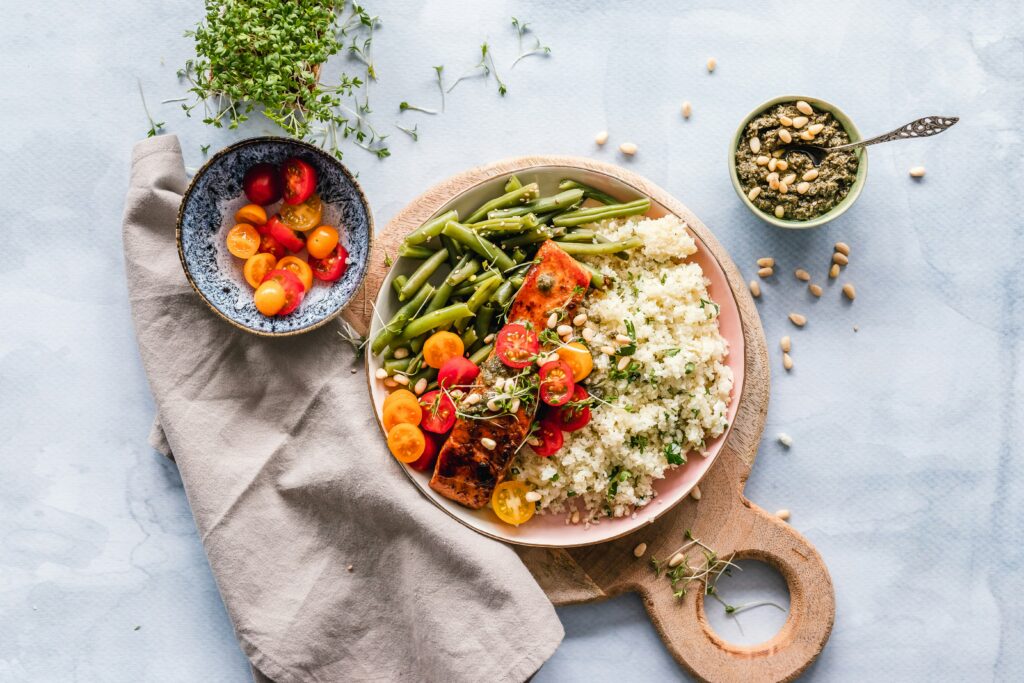
Breakfast: 2–3 pasture-raised eggs scrambled in grass-fed butter with spinach and avocado. Side of sauerkraut. Herbal tea or one cup organic coffee with raw honey.
Mid-morning snack:Fertility smoothie with berries, coconut milk, chia seeds, protein powder, frozen cauliflower, nut butter and greens.
Lunch: Large salad with mixed greens, wild salmon, quinoa, pumpkin seeds, olive oil and raw apple cider vinegar dressing. Side of bone broth.
Afternoon snack: Apple slices with almond butter. Handful of raw walnuts.
Dinner: Grass-fed steak or organic chicken thighs with roasted sweet potatoes, steamed broccoli, and coconut oil. Side of kimchi.
Evening: Small square of dark chocolate (85%+). Magnesium glycinate supplement with herbal tea.
Fertility diet for PCOS
Women with PCOS need extra attention to blood sugar. Modifications:
Prioritize protein + fat + fiber at every meal (never eat carbs alone)
Completely eliminate refined carbs & sugars.
Choose lower-glycemic fruits (berries, green apple, cherries)
Add cinnamon daily (improves insulin sensitivity)
Consider intermittent fasting only if well-nourished (12–14 hour overnight fast)
A whole-foods, nutrient-dense diet built on quality protein (80–100g daily), healthy fats at every meal (grass-fed butter, coconut oil, olive oil, avocado), abundant vegetables (especially leafy greens and cruciferous), fermented foods, omega-3-rich fish 2–4x/week, and complex carbs. Eliminate processed foods, sugar, refined grains, vegetable oils, non-organic meat/dairy, soy, and alcohol.
What foods boost fertility?
The top fertility-boosting foods are wild-caught salmon (omega-3s + vitamin D), pasture-raised eggs (choline + vitamin D), liver (folate + B12 + iron), chia seeds (omega-3s + fiber), leafy greens (folate + iron), bone broth (minerals + collagen), fermented foods (gut health), grass-fed butter (vitamins A, D, E, K2), berries (antioxidants), and avocado (folate + healthy fats).
How long before trying to conceive should I change my diet?
At least 90 days, ideally 6–12 months. Eggs take ~90 days to mature, so what you eat today directly affects the eggs you’ll ovulate in 3 months. Starting early ensures your eggs are in optimal condition, your hormone environment is balanced, and your body is prepared to nourish a pregnancy.
Should I cut out carbs when trying to conceive?
No. Your brain and ovaries need glucose to function and ovulate properly. Cut out REFINED carbs (bread, pasta, cereal, sugar) but keep complex carbs (sweet potatoes, quinoa, oats, brown rice, plantains). These provide sustained energy and fiber that helps your body clear excess estrogen.
What should I eat for breakfast when trying to get pregnant?
A protein and fat-rich breakfast sets your blood sugar tone for the day. Great options: 2–3 eggs scrambled in butter with greens and avocado, a fertility smoothie with protein powder and chia seeds, or full-fat organic yogurt with berries and nuts. Avoid cereal, toast, bagels, and juice.
Is the fertility diet different for PCOS?
The foundation is the same but with extra emphasis on blood sugar management. Always pair carbs with protein and fat. Choose lower-glycemic fruits. Add cinnamon and spearmint tea daily. Consider inositol and berberine supplementation. The PCOS fertility diet is essentially an anti-inflammatory, blood-sugar-stabilizing version of the standard fertility diet.
Does diet really affect fertility?
Yes. The Harvard Nurses’ Health Study followed 18,000 women and found that dietary and lifestyle changes could reduce ovulatory infertility by 80%. What you eat directly affects hormone production, egg quality, ovulation, inflammation, gut health, and uterine environment—all critical for conception.
It's Rarely Unexplained. It's Uninvestigated.
If you’ve been told everything looks normal but you’re still not pregnant — or you have a diagnosis like PCOS, endometriosis, or poor egg quality and nothing is working — there’s almost always something deeper that hasn’t been found yet.
Standard fertility testing rarely evaluates the factors that actually determine whether pregnancy happens: egg quality, ovulation quality, metabolic health, inflammation, nutrient status, and how your body responds to stress.
After nearly 20 years and hundreds of clients, I’ve found that most fertility struggles come down to a small number of hidden biological drivers. When those drivers are identified and addressed in the right order, the body responds.
That’s exactly what we uncover inside The Fertility Code — my 12-week, high-touch fertility program for women who are done guessing. We find what’s been missed and build a clear, personalized strategy around your body, your labs, and your history.
With 1:1 coaching, direct access between calls, lab reviews, evidence-based content, and structured accountability, you get expert eyes on your case so you can stop second-guessing and start moving forward with clarity.
Over 90% of the women I work with go on to conceive.
If you’re ready to finally understand what your body needs for a successful pregnancy — and fix what’s been missed — you can explore the program here → The Fertility Code.
Sarah Jane Sandy is a Certified Nutrition Therapist and a fertility and women's health expert. She has helped more than 1,000 women identify what's actually preventing pregnancy, increase their fertility naturally, and go on to have healthy, full-term pregnancies. She has been working with women and couples trying to get pregnant for over 18 years, and more than 90% of the women who work with her get pregnant and have healthy babies. She also works with women to fix their hormone imbalances and supports women through pregnancy and the postpartum period. Learn more about her own fertility and hormone journey here. To send Sarah a message, complete her Contact Form.